
What Middlesex County Deed Records Contain
The Circuit Court Clerk groups Middlesex County land records into deeds, deeds of trust, financing statements, liens, releases, and wills. Each type does different work. A deed transfers an interest in land. A deed of trust secures a debt. A later release or satisfaction marks the obligation as cleared, and a plat maps the lots or survey details tied to a parcel. One property can carry all of these instruments in its history, though they are not interchangeable.
| Instrument type | What the record does | Why it matters |
|---|---|---|
| Deed or conveyance | Names grantor and grantee and describes the land transferred | Establishes the recorded transfer path and may state consideration. |
| Deed of trust | Records a secured interest and names borrower, lender, or trustee | Search for a later assignment or satisfaction. |
| Lien or financing statement | Gives notice of a claim or collateral filing | Read the instrument and any release; a filing is not automatically a land lien. |
| Release or certificate of satisfaction | Records that an earlier obligation was released or satisfied | Match it to the original book/page or instrument. |
| Plat, will, or probate instrument | Shows lot layout or an estate-related record | Can explain parcel creation or a transfer after death. |
The Clerk's land-record page spells out these categories. For real diligence, read the instrument itself and trace any later releases or court orders instead of trusting the index label alone.
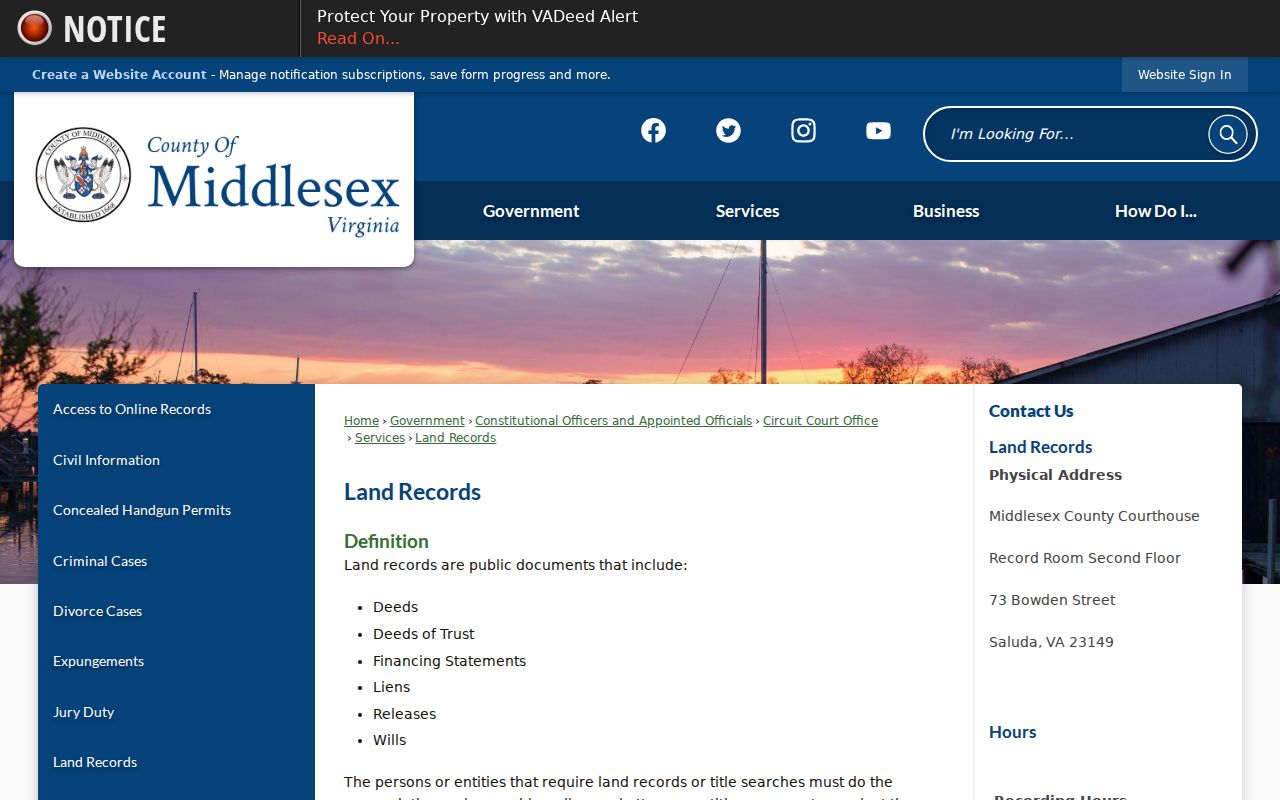
The county page names the local legal-record keeper. It also explains why a searcher must either conduct the title work personally or retain a professional.
Following the Middlesex Grantor-Grantee Chain
Grantor means the party conveying an interest. Grantee means the party receiving it. Virginia land-record searches run on recorded instruments and party names rather than parcel numbers. The Clerk publishes neither the exact SRA form labels nor the online start year. So do not assume the index offers a parcel-number or address search.
A careful chain search works backward from the newest deed. The legal description and the book/page reference keep the same land in view. An address can change, or a parcel can split. Preserve every trust, estate, LLC, and fiduciary capacity exactly as written in the deed.
- Use the Vision roll to identify the current owner name and legal description.
- Search the Clerk's index for that party as grantee and locate the latest conveyance.
- Read the grantor, land description, and prior instrument reference on the deed.
- Search the earlier owner as grantee, then repeat with the preceding grantor.
- If the online index has no result, test spelling variants and move to the Clerk's books or LVA finding aid.
- Grantor
- The party named as transferring the interest.
- Grantee
- The named recipient of the recorded interest.
- Chain of title
- The sequence of conveyances and related instruments for the same land.
- Book and page
- A volume reference in an older record series; keep it with any newer instrument number.
Middlesex SRA Index and Image Access
Two access levels exist under the state Secure Remote Access system for circuit land records. An enabled Clerk can permit free index-only searching. Seeing document images takes more. It requires authorization from the individual Clerk, a signed agreement, and applicable fees. The public Middlesex page lists no starting year for the index and no imaging cutover. Check the Available Courts screen for what is live today. It is not proof that the full county archive is online.
| Access path | What is confirmed | Limit |
|---|---|---|
| SRA index | May be available without charge when the local Clerk enables it | Middlesex cutoff year and exact fields were not published. |
| SRA document images | Subscriber access may be authorized by the Clerk | Signed agreement and fees apply; authorization is local. |
| Courthouse room | Public land-record research at the Clerk's office | Staff cannot perform a title search for the visitor. |
| Library of Virginia | Historic book, index, and survey catalog | Catalog entries are finding aids; request reel access separately. |
Review Virginia SRA access information and the linked COVERS search application for live availability.
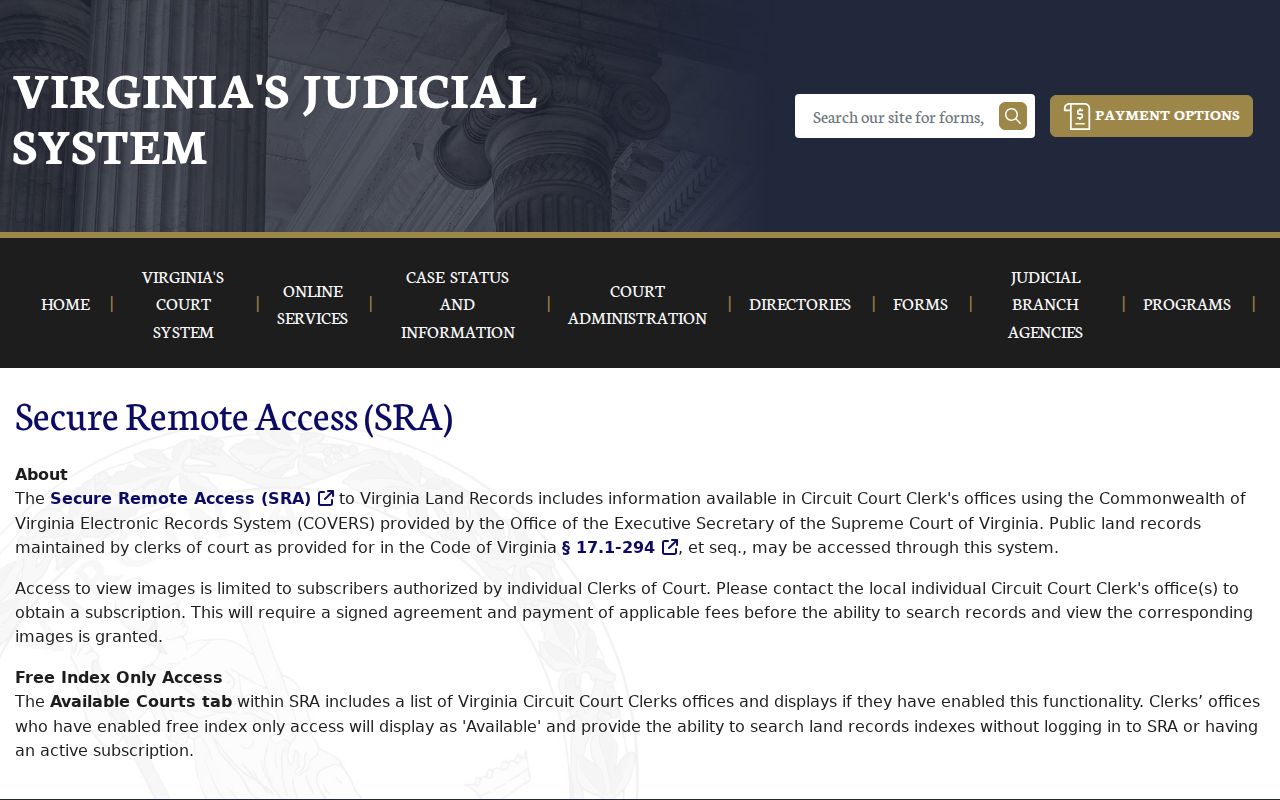
The state page lays out the access framework. A free index entry does not mean a free remote image or a complete online chain.
How to Obtain a Middlesex County Deed Copy
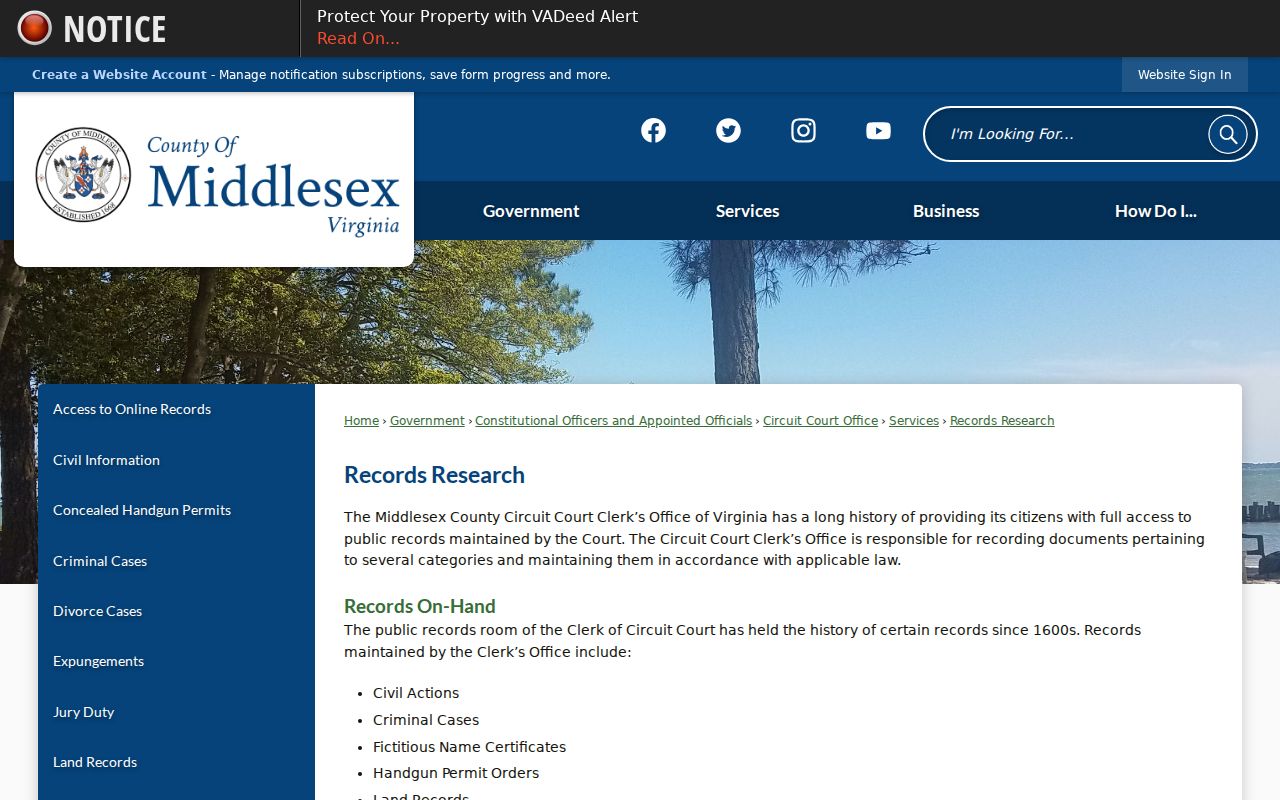
The Clerk's land-record room sits at 73 Bowden Street. It is on the second floor of the Saluda courthouse. Research hours run Monday through Friday, 8:00 a.m. to 4:00 p.m. Recording stops at 3:45 p.m. The broader records room runs the same weekday hours, except holidays. Call ahead if your request depends on a particular volume or certification.
Copies cost 50 cents per page. Deputy-clerk certification adds $2 per document. State recording charges work differently. They depend on page bands. Additional statutory components are possible. They are not copy charges. Use the current court fee schedule for a recording total.
The county's records-research page gives the location and copy details.
Gather the party names first. Note the approximate date, record type, and any book/page or instrument reference before contacting the Clerk, since a clear request cuts the time spent sorting similarly named entries.
Historic Middlesex Deed Books at LVA
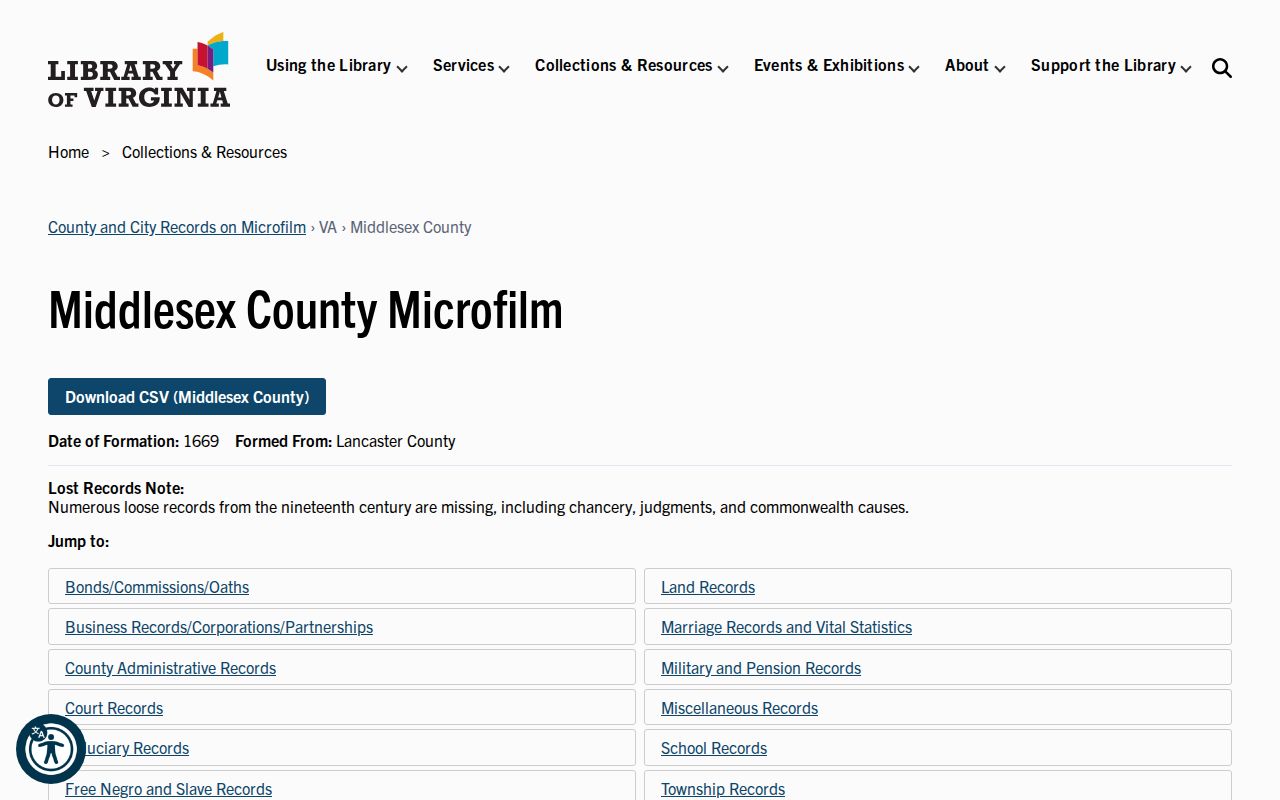
The Library of Virginia's county catalog is the historic fallback. It lists "Deeds Etc., No. 2 [1-a]" covering roughly 1679 to 1694 and "Deeds Etc. [1]" covering 1687 to 1750. Deed Book 2 spans about 1694 to 1703. Books 11 through 22 run from 1791 to 1865. Books 23 through 34 continue to 1901. General deed indexes cover 1675 to 1800 and 1800 to 1897.
Survey reels add another path. They help when a description points to a map rather than a modern street address. The LVA catalog identifies county surveys from 1827 to 1946 plus a separate 1919 to 1941 set. Catalog notes flag continuation volumes and indexing quirks, so copy the series label exactly as printed. Use the Middlesex microfilm catalog to choose a reel.
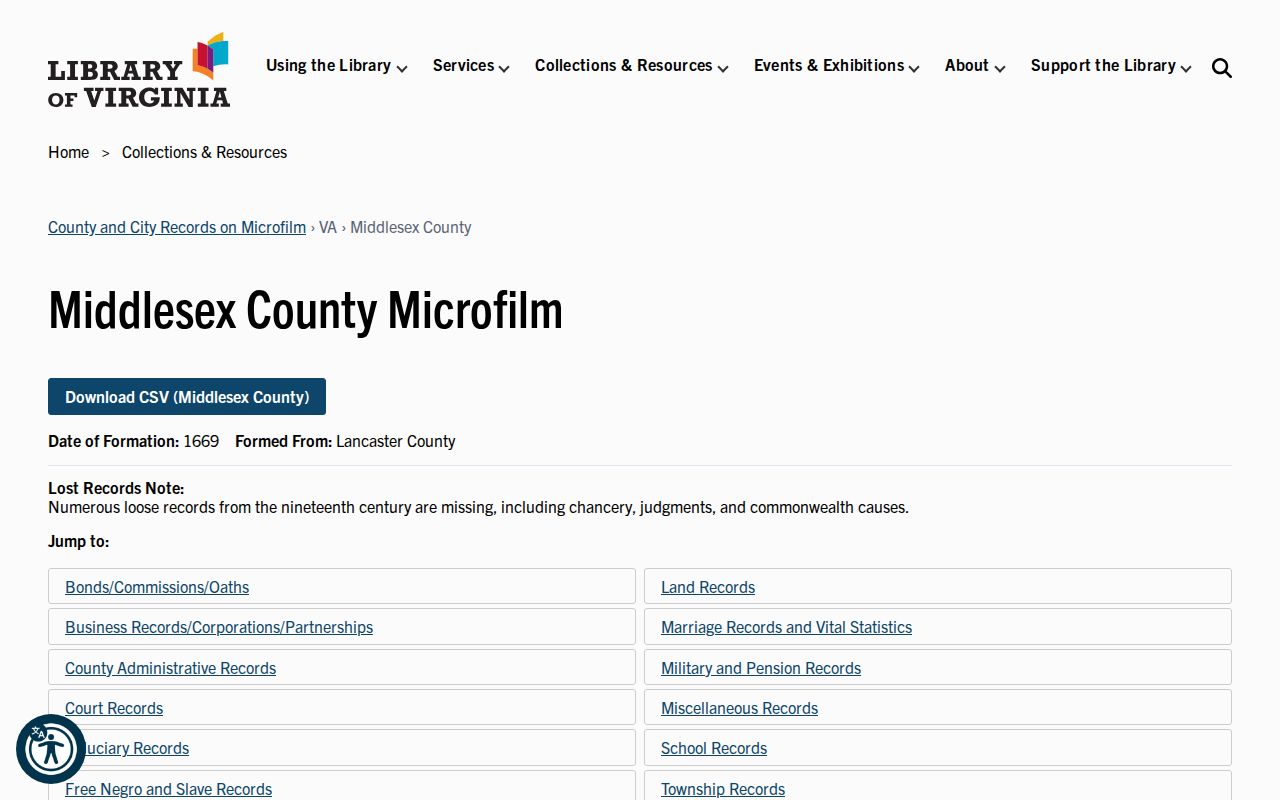
The catalog names books, index years, and survey material. Not every listed record has a digital image. The Library of Virginia's Middlesex collection results lay out the early deed-film series and record ranges.
Old volumes push the chain past a portal's cutoff. Cross-check the physical book label against the general-index reference.
A Middlesex Index Gap That Changes the Search
One gap in the deed indexes matters for anyone tracing old Middlesex County land. The Library of Virginia notes one gap in General Index to Deeds A. It skips deeds recorded in Order Book 1 between 1673 and 1680. That omission is easy to miss. A name absent from the index does not mean no deed exists. The order series has to be checked too. Otherwise the ownership chain may stop at a record that was simply never indexed. Because Middlesex kept its antebellum land records, older material is genuinely reachable for patient searchers.
Book labels add another wrinkle. The catalog lists photostat 1-a, Deed Book 1, Book 2, and continuation volumes. A run of deeds can sit under an alternate label. Write down both labels. Then hunt for the continuation volume. Compare property boundaries or neighboring owners whenever the name index comes up short. For tracing ownership backward, the Middlesex County former-owner record method lays out the steps.
The Clerk Who Preserved Middlesex's Books
Middlesex County almost lost its older land records. It didn't. During the Civil War, the county Clerk hid the antebellum records. He acted rather than ship them to Richmond. Virginia's Department of Historic Resources tells the story. The Library of Virginia catalog backs it with intact colonial and nineteenth-century runs. A deed search in Middlesex can still reach genuine older conveyances on paper. Even where no modern image exists online, the paper survives.
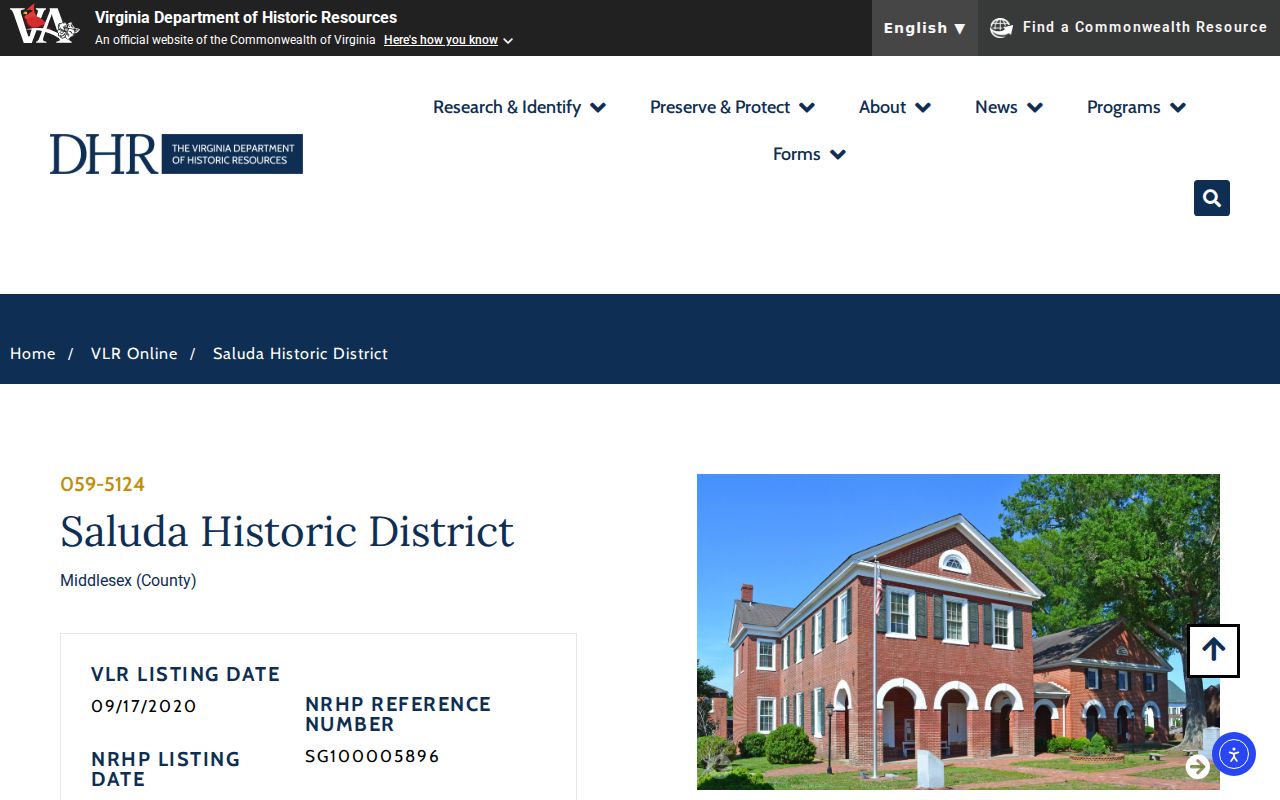
Geography shifted too. Voters moved the county seat away from Urbanna in 1849. Saluda's courthouse rose in 1852. That is why the land-record desk sits in Saluda today. Urbanna stays the county's incorporated town and older port center. The Saluda Historic District history ties the courthouse square to this survival story.
History sets the scene. It cannot substitute for the documents. The recorded deed and plat remain the proof for any particular Middlesex County parcel.
Middlesex VADeed Alert and Search Limits
The county posted a March 2026 notice about VADeed Alert, a property-fraud notification service. It is a prompt, not a research tool. Think of it as an alert layer that flags a new recording for a closer look. It is never a deed index or any substitute for title insurance. Use the county's official link. Confirm any notice against the Clerk's record before acting on it.
Know what a recording actually proves. It shows an instrument was presented and entered into the official system. Nothing more. A recorded deed does not clear every other interest. It does not prove liens paid or guarantee a defect-free chain. Releases often get indexed under the lender, trustee, borrower, or original instrument reference instead of the property owner. Search all related parties and read the later record before drawing conclusions.
Recorded is not guaranteed. Middlesex County deed records are part of a title search, not a title opinion. Unrecorded interests and later corrections may affect the result, so confirm important conclusions with the custodian or a title professional.
Plan a Middlesex Clerk Land-Record Room Visit
The public records room sits on the second floor. The address is 73 Bowden Street, Saluda, Virginia 23149. Listed weekday hours run 8:00 a.m. to 4:00 p.m., except holidays. Land recording service stops at 3:45 p.m. That cutoff matters if you plan to submit an instrument rather than search indexes. A quick call to 804-758-5317 confirms access and current procedure.
Copy fees are simple. Plain copies run fifty cents per page, and deputy-clerk certification costs two dollars per document. Each serves a different purpose. So tell staff whether you need a research image or a certified instrument. The fee covers the Clerk's copy service only, not a title opinion or legal-description review.
Come prepared. Bring grantor and grantee names and an approximate deed date. Also bring the book/page or instrument number. Include the parcel's current and historic descriptions. Clerks can help you use the public records room. But they will not run a title search. If a book reference is unclear, ask staff to help locate the index entry first. Then read the instrument itself and confirm it describes the land you are researching.