
How a Middlesex County Property Search Runs
Start with the Commissioner of the Revenue's Vision database. The county's 2026 property-information notice confirms that it searches by owner name, address, or parcel ID. An address reads easily. The GPIN is the true cross-office key, though. Copy the parcel ID exactly as shown, spaces included. Then carry it over to the Treasurer's real-estate inquiry.
That order keeps an administrative owner entry separate from the legal record and the tax bill. Search by a name only when the spelling or entity name is exact, since a common surname can return several unrelated parcels in Middlesex County.
- Search Vision by address, owner, or parcel ID and copy the GPIN, owner entry, mailing address, situs, and legal description.
- Open the Treasurer search by GPIN to find matching tax tickets and payment history.
- Use the GPIN or situs address in county GIS to locate the parcel shape and map layers.
- Use the latest deed's grantor and grantee names to check the Circuit Court Clerk's land-record index.
- Ask the custodian for a copy or use the records room if the needed deed image or older book is not remotely available.
Middlesex County Search Fields and Their Limits
The Vision public landing page shows the database entrance and its disclaimer. The county notice supplies the three search modes. Input labels can differ live. Anything beyond those three modes stays unconfirmed until a live search displays it.
| County search mode | Input type | What is confirmed | Practical note |
|---|---|---|---|
| Owner's name | Name or entity text | County says the Vision lookup accepts owner name | Try exact entity and spelling forms; same-name results need parcel checks. |
| Address | Situs/address text | County says address is a search key | Postal place and E911 situs may differ. |
| Parcel ID | GPIN identifier | County notice names parcel ID; Treasurer calls the bill key GPIN | Preserve the spaces in the identifier. |
| Submit or reset controls | Portal controls | Exact live labels were not captured | Follow the controls shown in the current portal. |
The county property-information notice names those three keys. The Vision landing page adds the January 1, 2022 assessment date and office contact. It shows no sample search result.
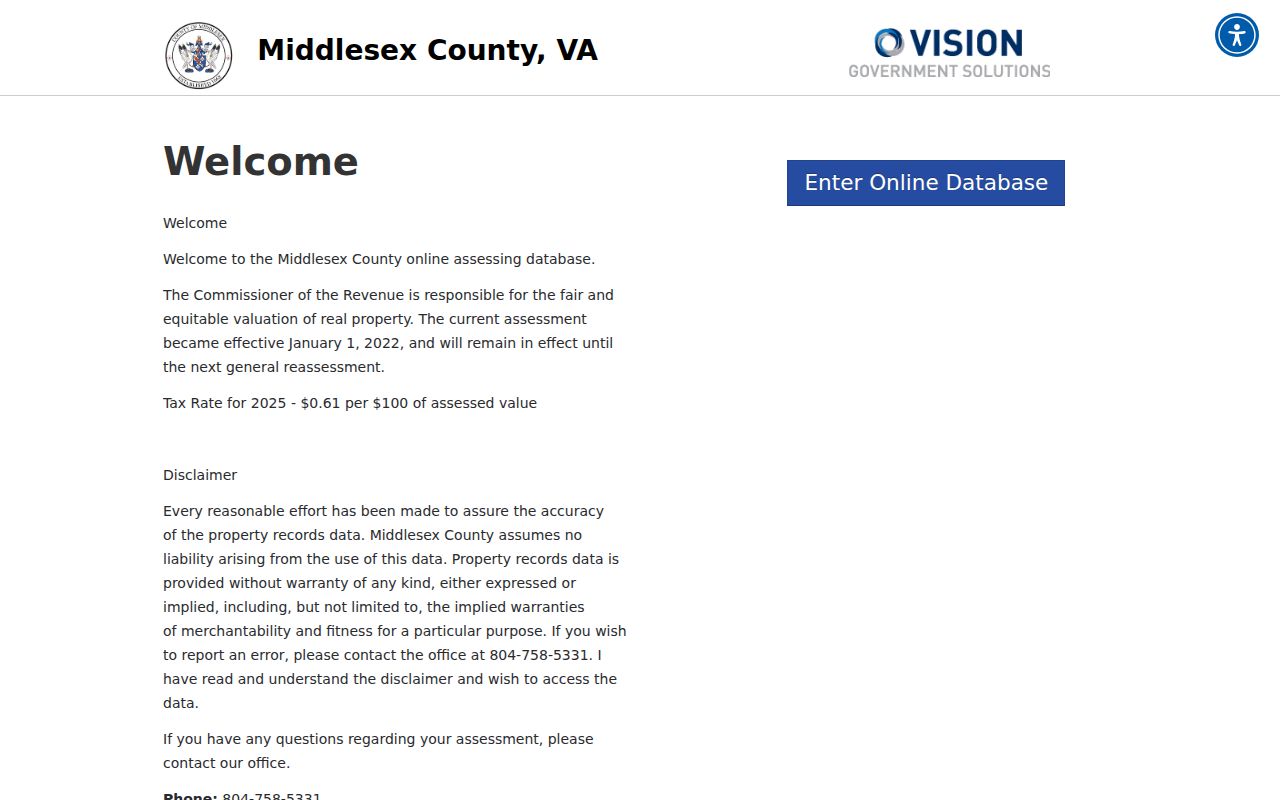
This is the portal's public entry screen, not a selected parcel card. Fields such as sale price, exemptions, and sketch links remain unconfirmed until a live result displays them.
What a Middlesex County Property Record Shows
A search result narrows down which parcel to pursue. The county publishes no sample parcel card for preview. It does confirm the three search keys. Ownership records draw on recorded transfers, wills, chancery causes, and special warranty deeds. Use the field categories as a checklist for record review, not as proof that every one appears in Vision.
| Owner and mailing address | Compare the displayed roll entry with the latest deed; exact on-screen labels need live confirmation. |
|---|---|
| Situs / E911 address | The physical location key; it may differ from postal text or a tax mailing address. |
| GPIN / parcel ID | The cross-office identifier used by Vision, Treasurer, and GIS. |
| Legal description | Deed or plat description, not necessarily a simple street-lot label. |
| Assessed value and year | Use the effective assessment date, currently stated as January 1, 2022. |
| Sale date or price | Vision display was not confirmed; check the recorded deed and its consideration language. |
For a freshly transferred parcel, compare the deed recording date against the assessment roll. Middlesex County publishes no fixed update lag. A deed can outrun the owner field. And a recorded sale amount does not always reflect an ordinary market transaction.
Address, Owner, and GPIN Searches in Middlesex
Each key solves a different problem. The county notice names the three modes. The Treasurer's help page goes further, spelling out exact behavior for account-number, GPIN, and street-name searches. Pick the key that matches what you already know, then cross-check the match in a second system before treating it as certain.
| Search key | Best use | Where it works | Watch point |
|---|---|---|---|
| Address or E911 situs | Find a single place when only the location is known | Vision, GIS, permit form | Formatting or postal labels may differ. |
| Owner name | Locate roll entries tied to a person or entity | Vision and deed party indexes | Trusts, estates, LLCs, initials, and duplicate names. |
| GPIN | Keep one parcel aligned across systems | Vision, Treasurer, GIS | Treasurer requires correct spaces. |
A GPIN outperforms a street label after a split. It survives address changes too. Even so, it remains a tax and map identifier rather than a substitute for the legal description in the deed or plat.
Middlesex Treasurer Street Search Finds a Block
The Treasurer's e-Treasurer inquiry runs on three named modes: account number, GPIN number, and street name. Street searches follow one rule. Enter the street name without a street number. The result can hold multiple matching tax records across numbered pages, with "Show Description" and "Show Map Number" display toggles. It builds a ticket list along one road.
The street mode is no owner directory, though. Spellings can split a road's results. A ticket list describes accounts and payments, not every title interest. So use it to surface candidate GPINs, then check each parcel in Vision or GIS.
The Treasurer's search instructions describe the modes, the projected date, paging, and ticket detail.
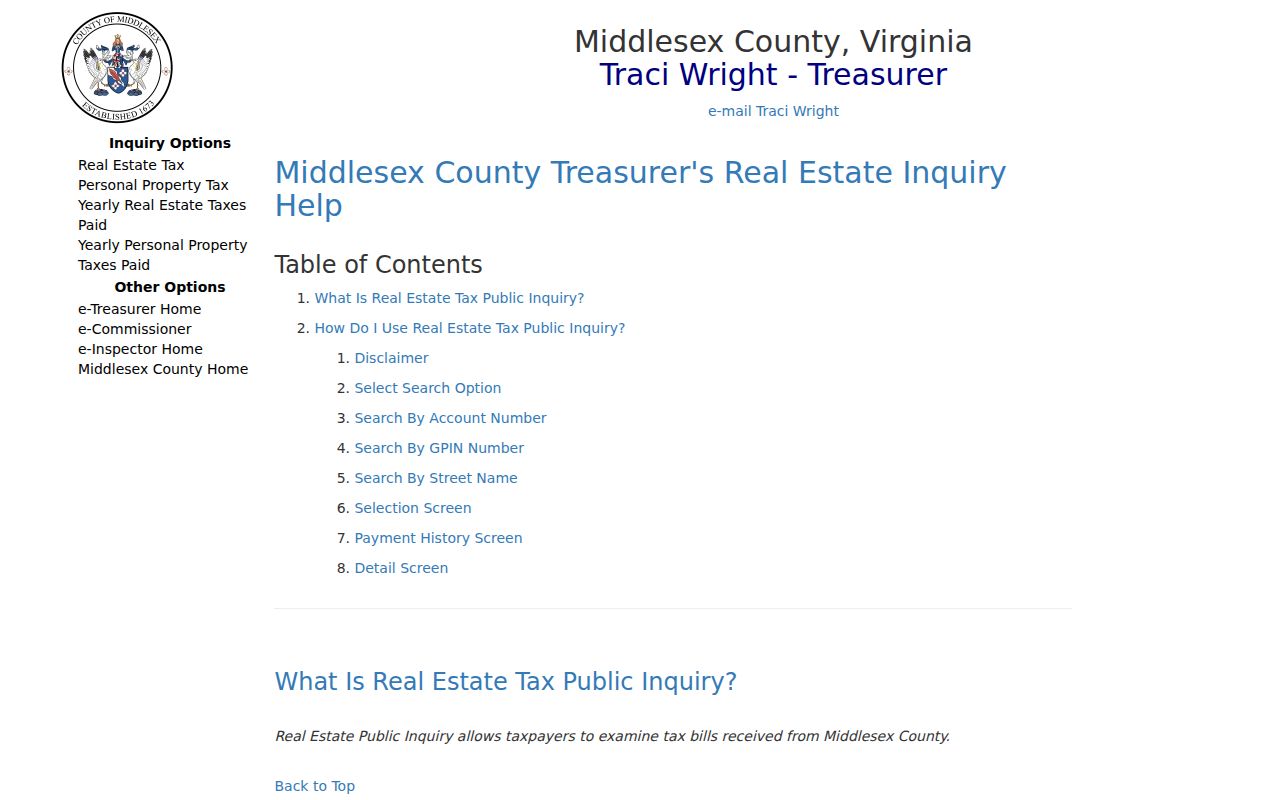
Run the street-name results as a second pass. The portal drops the street number on purpose, so matching tax tickets along a Middlesex County road can be browsed together once the subject parcel is known.
Reading Middlesex Mailing, Situs, and Parcel Data
Mailing and situs addresses are not synonyms. Situs marks where the land sits. Mailing address is different. It directs assessment notices and may be a post-office box or another location entirely. A postal city such as Urbanna, Saluda, or Deltaville does not by itself prove the parcel sits inside a municipal boundary, and the county turns to E911 and mapping records for location context.
An address search can come up empty. Strip apartment or directional punctuation, or try the owner's name instead. A GPIN on a real-estate bill works too. New parcels need extra care. One may still ride on a parent tract in an older deed, so keep both references and reconcile the Clerk's record with the current tax roll.
For any question about a legal boundary or lot, trust the recorded plat and survey references rather than a search result's abbreviated description.
From a Middlesex Search to the Deed Index
A Middlesex County property search locates the parcel. The deed index tells you what was actually recorded against it. Two different tools, two different jobs. The county's SRA path publishes no stated local cutoff year. Virginia SRA notes that a Clerk can enable index-only access for anyone. Remote images stay behind authorization, a signed agreement, and charges.
The public room still matters when an online image is out of reach. Some deeds are older than any modern portal. The Library of Virginia's catalog lists colonial books, general indexes, county surveys, and continuation volumes for those. Copy down the book and page or instrument reference first. Then ask the Clerk for the document.
The deed-search method gets its own treatment in the Middlesex County deed record reference. The copy process does too. Virginia's courts also publish an SRA access page explaining index-only versus subscriber image access.
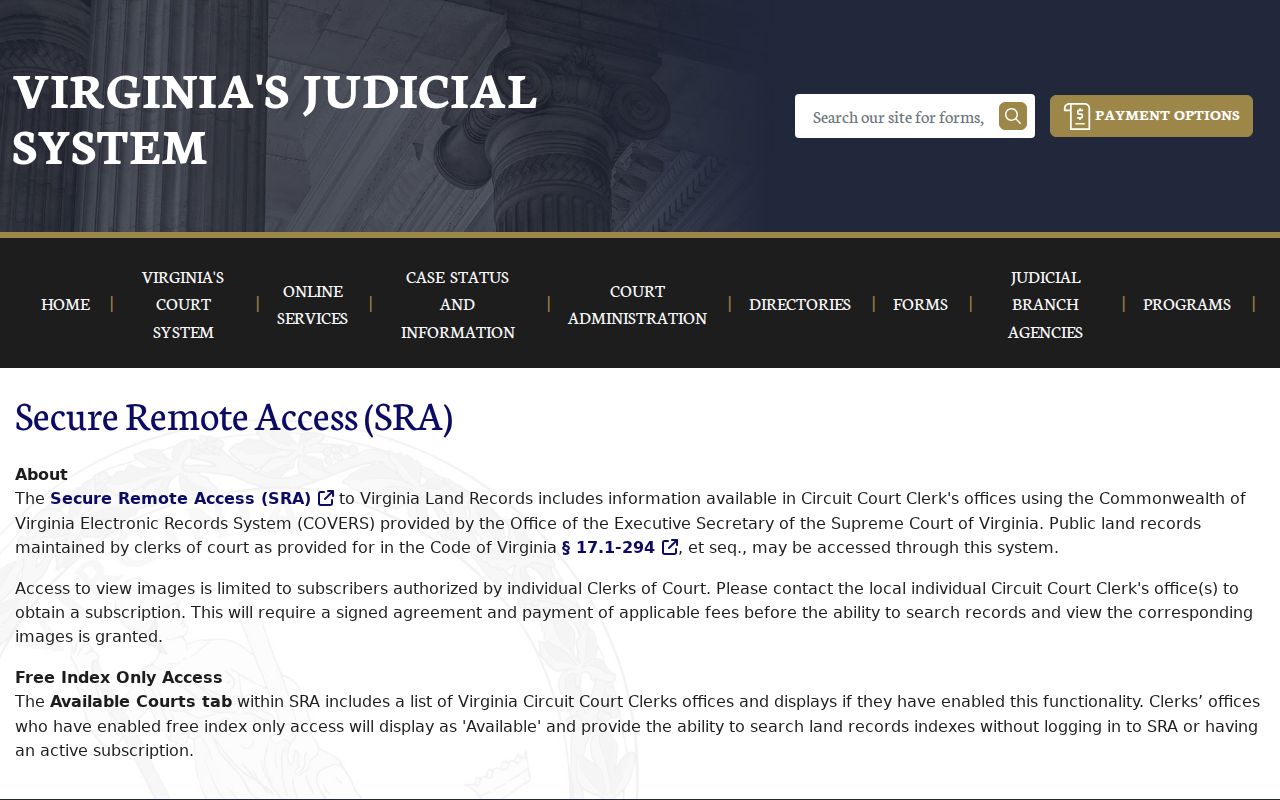
An index entry and an image are not the same thing. When a title question turns on exact instrument wording, request the image or a certified copy and follow the chain.
What a Middlesex Property Search Cannot Establish
A Middlesex County property search is a locator, not a legal conclusion. The tax roll can lag behind a deed. The Treasurer may show a ticket without naming every owner. A GIS polygon is only a generalized drawing of the parcel. The result will not reveal an unrecorded agreement. It will not settle an easement fight. It also will not prove every lien was released.
Virginia FOIA lets you request existing records from the proper custodian. But it never forces a public body to build a custom parcel history or title analysis. Name the GPIN, the record type, the date span, and the format you want. If the answer will steer a purchase, a boundary decision, or an estate transfer, have a qualified professional read the full record first.
Not a title search. Middlesex County property records show administrative entries and recorded instruments. They do not guarantee clear title; the Clerk directs title researchers to do the work themselves or hire a licensed attorney or title company.
Record the Middlesex Search Path Before You Leave a Portal
Property research often gets repeated, so log which system answered which question. Keep the exact address spelling. Also record the owner name as displayed, the parcel identifier, any account number, and your search date. Middlesex County's Vision page states the displayed roll is effective January 1, 2022. Without that assessment date, a search result can mislead. That happens once compared against a recent deed or a pending reassessment.
Keep an assessor result apart from a Treasurer ticket. The Treasurer offers three real-estate search modes: Account Number, GPIN Number, and Street Name. The account number sits at the top left of a tax bill. A GPIN must be typed exactly as printed, spaces included. The street option takes the street name alone, without the house number. It returns possible accounts rather than a verified match to one particular property.
The same discipline applies to index results and instrument images. Virginia's SRA may offer a free index if the local Clerk enables it. Yet images require subscriber authorization and a signed agreement. Middlesex County does not publish its local online index start year. If the search stalls before the transfer you need, carry the parcel description and latest deed reference to the Clerk. You can also turn to the historical book resources in the deed guide.
This cross-check earns its keep at coastal and rural addresses. There, a mailing label, a map feature, and the legal description rarely share names. Before any result feeds a title or boundary review, back it with more than one consistent identifier.
Older Middlesex Property Searches Need Book and Index References
A modern address lookup will not always reach an early tract. It may not reveal a former street name either. The Library of Virginia's Middlesex microfilm catalog records general indexes beginning in 1675 and colonial deed material. It also includes deed books through 1901. It further describes surveys from 1827 onward. Those spans point a researcher toward the next source. They do not promise searchable digital text or an online image for every volume.
One local indexing quirk matters. General Index A omits deeds in Order Book 1 covering 1673 through 1680. A historical chain may start before the later deed-book series. An empty name search then proves nothing about whether a transfer happened. Use the LVA catalog wording to pick the reel or volume. Then compare the index entry, the recorded document, and the land description. The Clerk's counter helps with using the records. It will not run a title search.
Virginia SRA and COVERS are separate remote tools. Middlesex County does not state its online start year. An indexed name may carry no image without subscriber access. A missing remote result may just mean the record sits outside the enabled time range. For the deep history, carry the recorded book reference forward. Do not trust a current owner-name result alone.