
Sources for Former Middlesex County Owners
Pick your starting point by era. The county states no cutoff for its remote records. The Library of Virginia's series and index dates are the earliest reliable guide. A deed index gives you the names of parties. The book or plat behind it supplies the instrument and the land reference you need to carry the chain forward.
| Source | Years It Covers | Where Held | What It Shows |
|---|---|---|---|
| SRA/COVERS land-record index | Local start year not published | Virginia courts / Middlesex Clerk | Recorded party references where available |
| General Index to Deeds A | 1675-1800 | Library of Virginia, reel 19 | Name index; Order Book 1 deeds excluded |
| Deed books and continuations | Circa 1679-1901 in listed series | Library of Virginia microfilm | Earlier conveyances and related material |
| County surveys | 1827-1946 and 1919-1941 runs | Library of Virginia catalog | Survey and plat references for land identity |
Start with the current grantee and the Clerk's deed trail. Older chains go further. For colonial or nineteenth-century land, use the LVA catalog. It helps you find the right book and index reel. Remember that a catalog entry is a finding aid. It is not a deed image or proof that the online index covers that span.
Walk the Middlesex Deed Chain Backward
Take the latest conveyance for the parcel. That is your first step. The current grantee becomes the next grantor you search, and the earlier grantor often appears as the grantee on the deed before that. Carry the legal description, volume reference, and any trust or estate capacity through every step of the chain.
- Find the newest deed naming the current owner as grantee.
- Record its grantor, legal description, and prior deed reference.
- Search the prior owner as grantee, then repeat with that deed's grantor.
- When SRA has no entry, check the book and index runs listed in the LVA catalog.
- Grantor / grantee
- The party conveying / the party receiving the recorded interest.
- Chain of title
- The linked sequence of conveyances for the same land.
- Legal description
- The lot, plat, or metes-and-bounds text that identifies land through address changes.
How Far Back Middlesex Ownership Records Reach
County material names no starting year for SRA. For depth, look to the Library of Virginia. Its catalog shows deed material from circa 1679, general indexes beginning in 1675, and successive deed books through 1901. Catalog series and the online index are separate systems. Getting past a remote dead end can take the Clerk's counter, an index reel, or a book image.
Lawful use. Use former-owner research for house history, title diligence, and property research. Do not use a Middlesex County record to track, harass, or target anyone.
Middlesex Index A Leaves an Early Gap
General Index to Deeds A has a known hole. The Library of Virginia warns it omits deeds from Order Book 1, 1673 through 1680. So an empty name result proves nothing. Separate colonial series fill the gap. The catalog lists Deeds Etc. No. 2 [1-a] circa 1679 to 1694 and Deeds Etc. [1] circa 1687 to 1750.
A dead end calls for alternates. Check alternate book labels, continuation volumes, and the order series itself. Note the physical volume reference beside the index label, since older numbering may not match the later deed books. The LVA Middlesex collection results list reels and series.
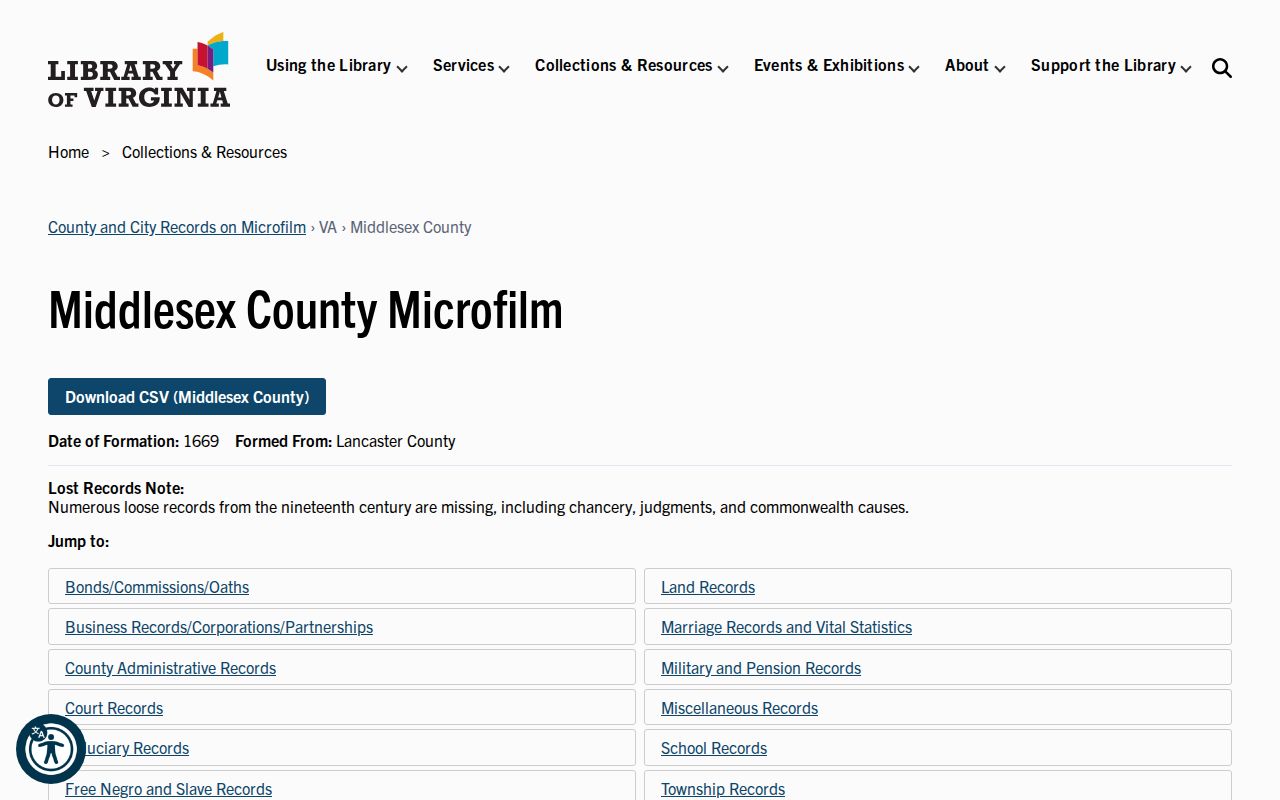
The image shows the finding-aid level only. It will not display an individual owner's name, so use it to locate the reel and then inspect the book itself.
Use Middlesex Book Runs for Older Transfers
After the colonial group, the catalog moves into long book runs. Deed Books 11 through 22 cover 1791 to 1865. Books 23 through 34 cover 1865 to 1901. General Index 1 spans 1800 to 1897, and an 1881 to 1902 conveyance book plus county surveys from 1827 onward round out the list.
These dates are a path, not a promise. Book 2 has an unpaged index. Some later entries hide under a continuation label. When ordering a reel or requesting help, quote the catalog's printed wording rather than a paraphrase. Open the Library of Virginia Middlesex catalog to confirm the series and reel.
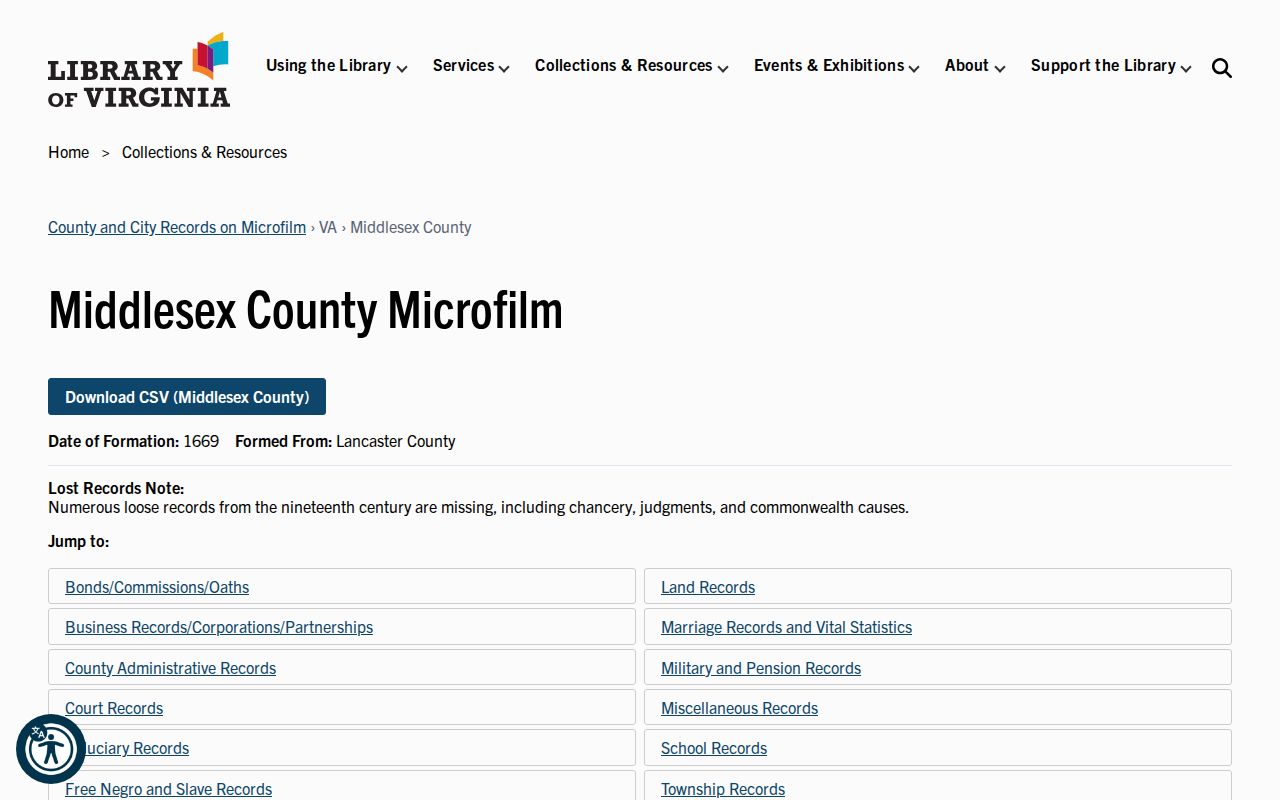
The catalog supplies dates; the deed supplies the words.
Middlesex Antebellum Books Survived the Civil War
Middlesex deed books owe their survival to one Clerk. During the Civil War, he hid antebellum land records rather than sending them to Richmond, according to the Virginia Department of Historic Resources. That choice preserved the chain. County property histories can now reach through the nineteenth century into colonial material. The county seat moved from Urbanna to Saluda after voters approved the change in 1849. A new courthouse followed in 1852.
History helps, but it has limits. A courthouse story cannot name a parcel's owner. Tie any named place to a book, page, plat, or legal description before treating an instrument as the same land. The DHR Saluda Historic District account adds courthouse-square and record-survival context.
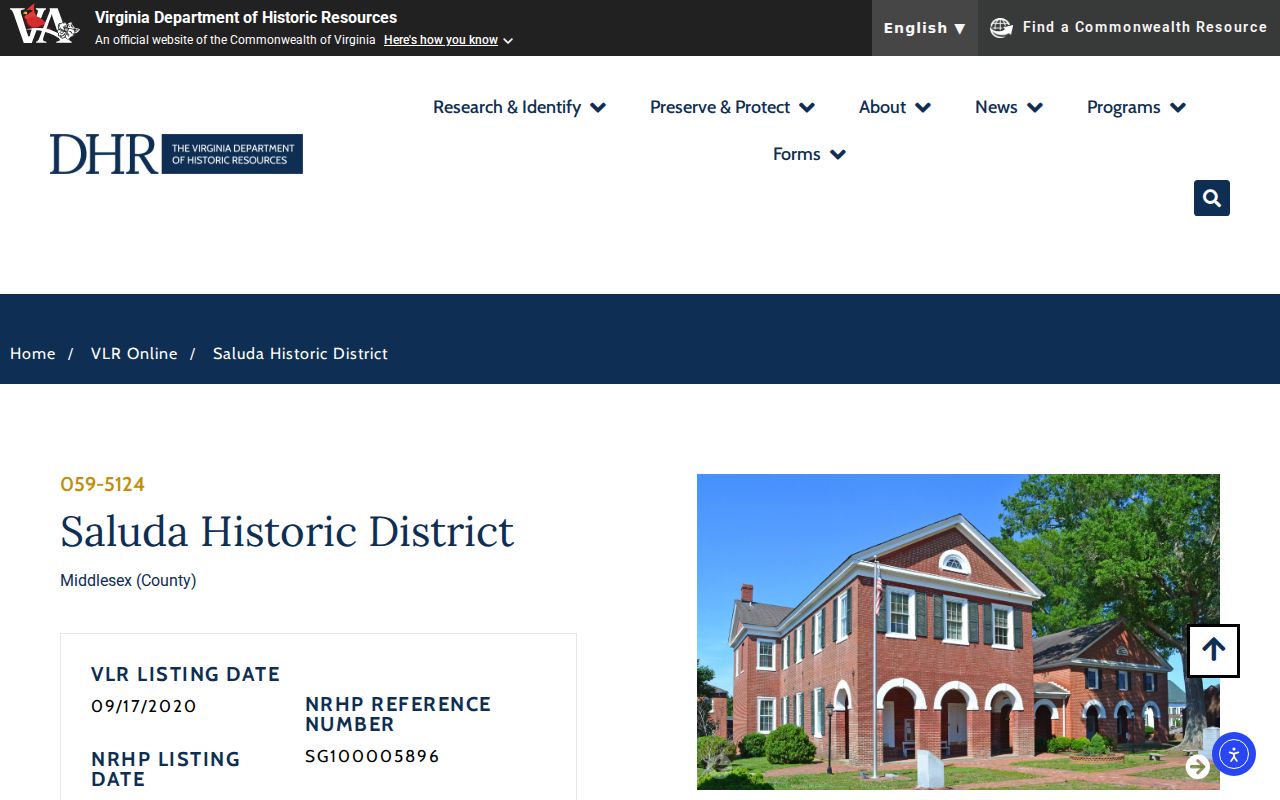
The Saluda district remains a local history reference, not a substitute for following a parcel's deed references.
Probate Can Change a Middlesex Owner Name
A Middlesex County owner has died. The land usually moves through a will, a probate order, a fiduciary qualification, and an executor or administrator deed. The Clerk keeps wills and probate records together with land instruments. A will alone names a beneficiary. It may take a later recorded conveyance or court order to explain how the parcel actually changed hands. A later court order can settle the transfer. Search the decedent, the estate, the fiduciary, and each grantee name. Then compare the parcel description for a match.
Virginia vital records can confirm a death event, but a certificate proves nothing about title. Birth records open to the public after 100 years. Death, marriage, and divorce records open after 25. Certified copies from restricted periods carry eligibility and ID rules. For a land history in Middlesex County property records, rely on the probate file. Rely on the recorded instrument as the real ownership evidence.
The VDH genealogy page explains the public index years. It also points to the Library of Virginia's older microfilm.
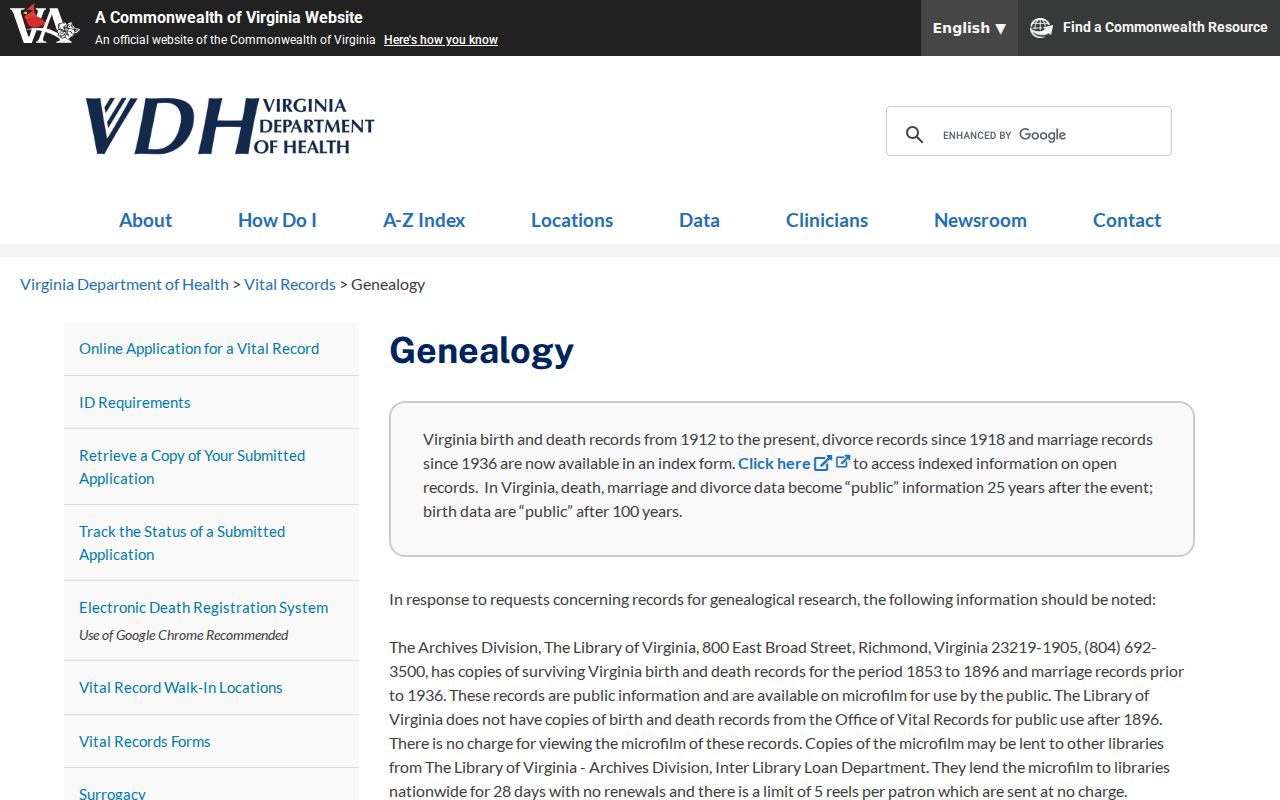
Treat the state index as a clue, and verify how the parcel passed through the Middlesex Clerk's own deed records.
Plats Keep a Middlesex Chain on the Same Land
Street names change. Parcel IDs change too. A deed's legal description is what ties a transfer to an earlier map. Lot-and-block descriptions often cite a subdivision plat by book and page. Metes-and-bounds calls lean on bearings, distances, and features on the ground. The LVA survey catalog helps connect an old property description to a later GPIN. The Clerk's plat records help too.
One subdivision notice for Healy's Run points to Plat Book 9, Page 95. A later Deed Book 243, Page 25 follows it. Treat that notice as a lead. The recorded copy settles it. Keep the notice, the index entry, and the actual plat distinct from one another. If a record names a parent tract, compare roads, acreage, waterways, and neighboring owners. Then follow the chain further back.
Recorded plat and map references sit in the Clerk's land-record collection.
Remote Middlesex Index and Counter Access
Virginia SRA permits free index-only access wherever a local Clerk turns it on. Images are different. They require authorization, a signed agreement, and fees. Middlesex's public land-record page names no online start year. So a remote search that stops at a cutoff is not the end of the historical chain. The Virginia courts’ COVERS portal is the entry point for checking remote index availability.
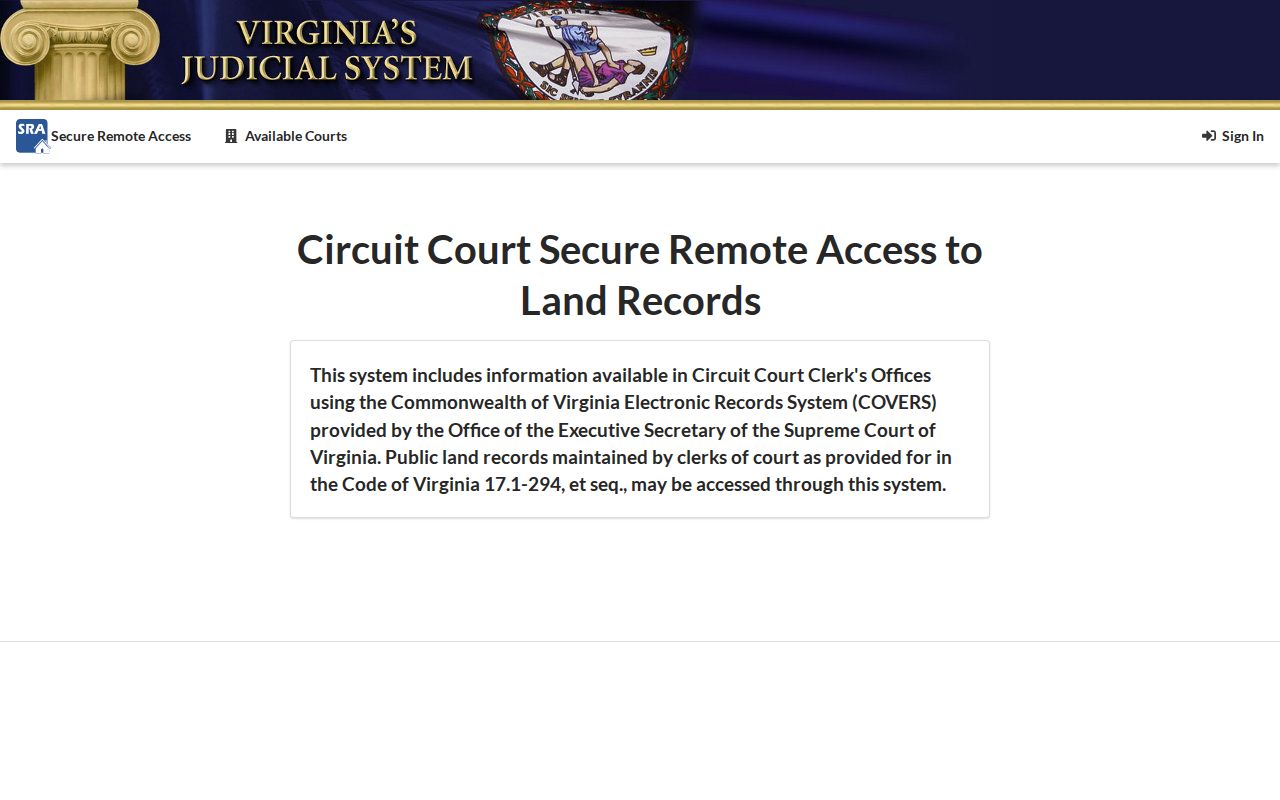
The statewide page maps the remote route. Still, the Clerk's local start year needs direct confirmation, because county materials publish no cutoff. The Clerk's public room sits at 73 Bowden Street in Saluda. It is open weekdays from 8:00 a.m. to 4:00 p.m. Land recording ends at 3:45 p.m. Plain copies run 50 cents per page. Certification costs $2 per document. Staff can help you use the record room. But they will not run the title search for you.
For document-type details and fee context, use the Middlesex deed records reference. You can also ask the Clerk to pull a specific book or instrument.